Wednesday, June 30, 1993

1993 – West Buttress

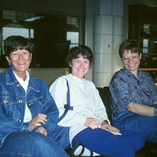
Marcia organized this climb with 2 other woman, Billie Butterfield and Gayle MacCleary, who had attempted to climb Mt McKinley but failed.  Since everybody knew each other, had considerable climbing experience and all of the necessary gear, the organization was pretty minimal.

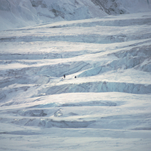
The flew onto the glacier in early June and hoped to summit near the solstice.  Their health was good and the weather the usual mixture of good and bad.  They did have to spend several days at the 17,000 high camp waiting for the weather.  Despite some grumbling and noises about turning back, Marcia squashed those thoughts and kept everybody inline until the weather window showed up.  On summit day, everybody made it without drama or injury.

The descent went quickly and they had no wait at the airstrip.  Billie and Marcia went out first followed later by Gayle on the last flight of the day.

Tuesday, June 30, 1992

1992 West Buttress

The 1992 trip was designed to be a “let’s just get it down” kind of climbing trip: a small experienced group, Craig Rowley, Marcia and I, to keep logistics simple; the straightforward and popular West Buttress route to keep route finding simple; and optimum timing, mid to late June, to provide long days and a low climatic probability of severe cold storms.  I had descended the entire West Buttress route in 1981, Craig, Marcia and I had all descended the  route from Denali Pass (18,200) in 1988 and Marcia had ascended the route as far as the fixed lines at 15,000 feet in 1989.  No problems, let’s just get it done!

We applied our experience and moved efficiently right from the landing strip at Kahiltna Base (6,800 feet) on the SE Fork of the Kahiltna Glacier.  Rather than doing a double carry from the airstrip, we took advantage of the downhill section leaving the airstrip and the relatively shallow slope on the lower Kahiltna to do a single carry to our first camp at about 7,000 feet.  Double carries were used from then on.

My previous two Denali climbs had been on rarely used routes so I was concerned that the crowds would be off putting.  As with some many things, enjoyment comes from expectations.  Yes, there were other people on the route, but Denali is big, and while moving I never felt crowded.  Only at camps do you have large collections of people.  The 14,000 foot camp, below the fixed lines up to the buttress, is the most populous and then the crowds just a part of the experience.  The scenery is beautiful at all times.

While we didn’t have any major problems on the trip, the weather was mediocre and Craig and I  suffered a bout of “malaise” at 17,000 waiting for better weather.  Marcia squelched our rebellious thoughts when she won a decisive game of hearts on which the course of the trip hinged.

When the weather finally appeared to be settled enough for a summit bid, Craig opted out so Marcia & I went as a team of two.  We learned a valuable lesson that day, don’t go first!  We were the first team out of high camp and I ended up having to break trail.  Since no one had climbed the route for a couple of days, that wasn’t a trivial effort.  By time we reached the summit ridge at 20,000 (a few hundred vertical feet and a quarter of a mile away), I was exhausted and could go no further.

Reluctantly we turned around.  There had already been 7 fatalities that year on Denali, the most ever to that time, and we did not want to add to the number.  The weather deteriorated significantly as we descended and the visibility made the descent difficult.

1992-W-Butt-CR-15xWe were very glad that Craig was at camp when we arrived as he saw to our needs getting food and hot drinks into us.  He also took our photo when we arrive.  He joked that he now knew how we’d look when we were 60.  Frankly, I think we look a lot better now than we did when arrived back to our 17,000 camp.

We took a few days to get back to airstrip at Kahiltna base where we luxuriated in the warmth and thick air.  The morning after we arrived, we were greeted by thick, dark clouds and a fine gray dust on everything.  Mount Spurr 80 miles west of Anchorage had erupted spreading material in our direction.  After an all hands stomping party on the airstrip to compact and smooth the surface, the air services began flying and we got off the mountain.

Wednesday, January 1, 1992

1991 & 1992 Yellowstone Ski Trips

Our 1991 and 1992 ski trips were both to the same area,
the Canyon area of Yellowstone National Park, so I’ve combined them into one entry.

We had thoroughly enjoyed our 1987 winter trip to Yellowstone but decided in 1991 to start the trip from the North Entrance (Gardiner/Mammoth) rather than the West Entrance (West Yellowstone).  In addition, rather than using the snow coach to take us to Old Faithful we used the snow coach to takes us toward Canyon Village, at the NE corner of the Grand Loop Road.

1993-01-004xAs it turn out, there isn’t (or at least not than) a scheduled run to Canyon Village.  For our 1991 trip, we arranged to get dropped off and picked up at the Norris Junction on the loop road and then ski the 12 miles to Canyon Village.  In 1992, we organized a trip with 7 other people (a total of 9) and hired the snow coach to drop us off at Canyon Village and then pick us up five days later.  The main snow coach used in the park then was the classic Bombardier Snowbus, originally designed in 1939.

1993-01-010xThe dramatic thing about active thermal areas is the substantial amount of rime ice that forms on vegetation and structures on account of the moisture pumped into the air from the thermal features which freezes back out on anything nearby.

1993-01-021xWhile staying at Canyon Village, the Park Service asked that we pitch our tents in the campground area.  Fortunately, the winter warming hut and its restrooms were open 24 hours a day and only a short ski away.  We’d usually spend our evenings in the warming hut, taking advantage of its warmth and light to make the long winter night more pleasant.  Often times the most enjoyable skiing was at night when it is quiet and the white snow reflected whatever meager light came from the sky.

We’d do short trips from our camp at Canyon, skiing trails or roads.  The skiing is delightful because the snow is so dry it was easy to wax the skies for it.  Except for a short period at mid-day, when snowmobilers doing the Grand Loop would come in to refuel, we had the area pretty much to ourselves.  Park Service regulations restricted snowmobiles to the main park roads.  Unless we were skiing the road, to get from one location to another, we never had to contend with the snowmobiles.

To minimize the drain on vacation days, both trips were during the same period, between Christmas and New Years.  The extremely short days were the price we paid for that choice.

Thursday, June 1, 1989

1989 Denali West Buttress

While we successfully traversed Denali during 1988 Muldrow Trip, Marcia did not have a summit to her credit.  After being stuck with 5 guys for nearly 5 weeks, she decided to go the other extreme and organize a trip with 4 woman instead. 

Three of the members, Cindy Luksus, Debbie Wolf and Billie Butterfield were friends of Marcia 1989-W-Butt-004xfrom The Mountaineers.  The fourth member of the trip was Mary who came recommended by John Arnold one of our Muldrow trip mates.  They chose to attempt the West Buttress route (the most popular) in June when the weather is warmer (by Denali standards).

They chose the expedition name of “Seattle Women’s Alpine Team” (aka, SWAT).  There was another all-women’s team on the mountain, “Chicks on Pricks” (the “pricks” being crampons) with whom they were occasionally confused.

They got off on a rocky start when after flying on to the glacier, it turned out that Mary brought along a severe cold.  Not wanting to slow the rest of the team down, Mary flew off the mountain after a few days but not before passing her respiratory ailment on to the others. 

They continued on with the expedition but each of them came down with the “crud”.  Between battling illness and poor weather, they abandoned their trip after 2-1/2 weeks having spent many days at the 14,000 camp and making a carry to the West Buttress at 16,200’.

Friday, May 20, 1988

1988 – Denali, Muldrow Traverse

The 1981 South Buttress traverse of Denali got me keen on seeing lesser visited areas of the mountain.  Even though the Muldrow Glacier on the NE corner of Denali was the only route climbed from 1913, the year of the first ascent, until 1951, the year the West Buttress was climbed, the Muldrow now comes in a distant second in popularity to the West Buttress.

One of the Muldrow’s drawbacks is its longer approach to the glacier before the climb begins. On the West Buttress, climbers land on the SE Fork of the Kahiltna Glacier at 7,200 feet and start from there.  For the Muldrow the start is from Wonder Lake at 2,100 feet and nearly 20 miles distant from the Muldrow Glacier. In addition, the McKinley River has to be crossed.  Depending on the river flow, that crossing is a major challenge.

Recruited for the trip were, besides Marcia & myself, Craig Rowley, Dave Sparks, Al Ellsworth and John Arnold.  To address the longer approach, we allowed for a 4 to 5 week climb and we hired a dog sledder to haul a substantial part of our gear to McGonagall Pass and the glacier.  We solved the McKinley River crossing by leaving early, the second week of April, when the river was frozen.  Since we were traversing the mountain and descending the West Buttress route, thus dodging a river crossing during the breakup or Spring floods.

The climbing was not extremely technical but the route finding through crevasse fields kept us on our toes.  We took way too much food (my fault as I planned out much of the food) which slowed us down.  To keep our pack loads down yet get everything from camp to camp, took multiple trips.  We ended up dumping substantial amounts of food in crevasses along the way.  Even today I can’t look at Danish butter cookies without thinking of the tins that went into crevasses at 16,000 feet.  The good side of our slower pace was that none of us had any major altitude problems on the trip. 

While we failed to summit the peak on account of bad weather on our summit day from the 17,000 camp on the West Buttress, we did complete the traverse and dragged ourselves and oodles of gear over Denali Pass at 18,200 feet.  The climb lasted 34 days, and, with the exception of a National Park Service climbing team returning from Silver Throne (a nearby peak east of Denali), we saw no other climbers until we reached the 17,000 camp on the West Buttress, nearly 4 weeks of solitude. 

Thursday, January 22, 1987

1987 – Aconcagua/Argentina

1987-Aconcagua-037xThe 1987 Aconcagua trip was Marcia’s and my first foray into organizing an expedition. Joining us were fellow Mountaineer friends Craig Rowley, Bob Bergstrom and Larry Anzalone along with John Arnold and Scott Darsney, climbers that Bob knew and recommended from a previous trip.

1987-Aconcagua-097We planned for a 3-week trip flying from Seattle to Miami, Miami to Buenos Aires, Buenos Aires to Mendoza in one push. 1987 being before the current practice of airlines extracting revenue at every opportunity, we strove to get our many duffel bags onto the airplanes without paying excess baggage. One tactic was to demonstrate how light they were by having Marcia heft the bags onto the baggage scales. We figured the mostly male counter agents would assume that any bag hoisted by a female couldn’t be overweight.

1987-Aconcagua-099At the frontend of the trip we spent several days in Mendoza getting our permit (at the time, the Argentine government required all foreign climbers to present a doctor’s medical statement and an EKG) and supplies. Finding white gas for our stoves wasn’t possible so we ended up with paint thinner for our stoves (MSR XGK). That fuel later created problems as it repeatedly fouled the stove’s fuel jet and its fumes were noxious.

1987-Aconcagua-062Mendoza, though, was charming. The hotel we stayed at had a lovely courtyard in which we were able spread out our gear during the repack. The food and wine were excellent. Even today, I remember the meals featuring thick steaks and wonderful red wine.

Our original thought while in Seattle was to attempt the more difficult Polish Route rather than the Normal Route. After we arrived at the lodge (Penitentes) from which you choose the drainage to ascend, we quickly changed over to the much easier Normal route.

1987-Aconcagua-042It is a 2-day trip from the road to the base camp, Plaza de Mulas. While mules carry most of your equipment, they travel separately from you, so you must carry your personal and camping gear to be self-sufficient for the walk to basecamp.

1987-Aconcagua-006Once at basecamp, there are 3 intermediate camps before a summit attempt. To help with the acclimatization, you typically take at least 2 days between camp by carrying some gear to the next camp on one day, caching it, returning to the lower camp and then moving your camp on the second day.

1987-Aconcagua-015The Normal Route is not technical, but its challenges are the altitude, your health (i.e., avoiding respiratory or travel illnesses) and the weather. First Craig, then Larry turned back because of altitude issues. The difficulty in getting the stoves to reliably melt water while spewing noxious fumes from burning paint thinner probably contributed to Craig’s and Larry’s turning back.

1987-Aconcagua-011xOn our summit day, John, who was battling respiratory issues, turned back and Bob accompanied him back to camp. It was Scott, Marcia and myself who summited. We were the only people on that summit at the time but there was the body of a climber who had become disoriented on the summit in a white-out and died just a few days earlier.

1987-Aconcagua-068xThe trip out took a couple of days. Scott and John remained on the mountain (I think John subsequently summited). While Bob, Marcia & I returned to Mendoza. Larry had stayed at the hotel until our return while Craig returned home.

1987-Aconcagua-087The four of us (Larry, Bob, Marcia and I) toured Mendoza for a few days then returned to Buenos Aires. While Larry and Bob continued to the USA, Marcia and I detoured to the border of Argentina and Brazil where we visited Iguazu Falls. Afterwards we headed to Rio De Janeiro but by this time we were getting tired of carrying large duffel bags of outdoor gear through airports and headed for home rather than spend more time in Brazil.